Belgium: The "Glazed Nails" Trend
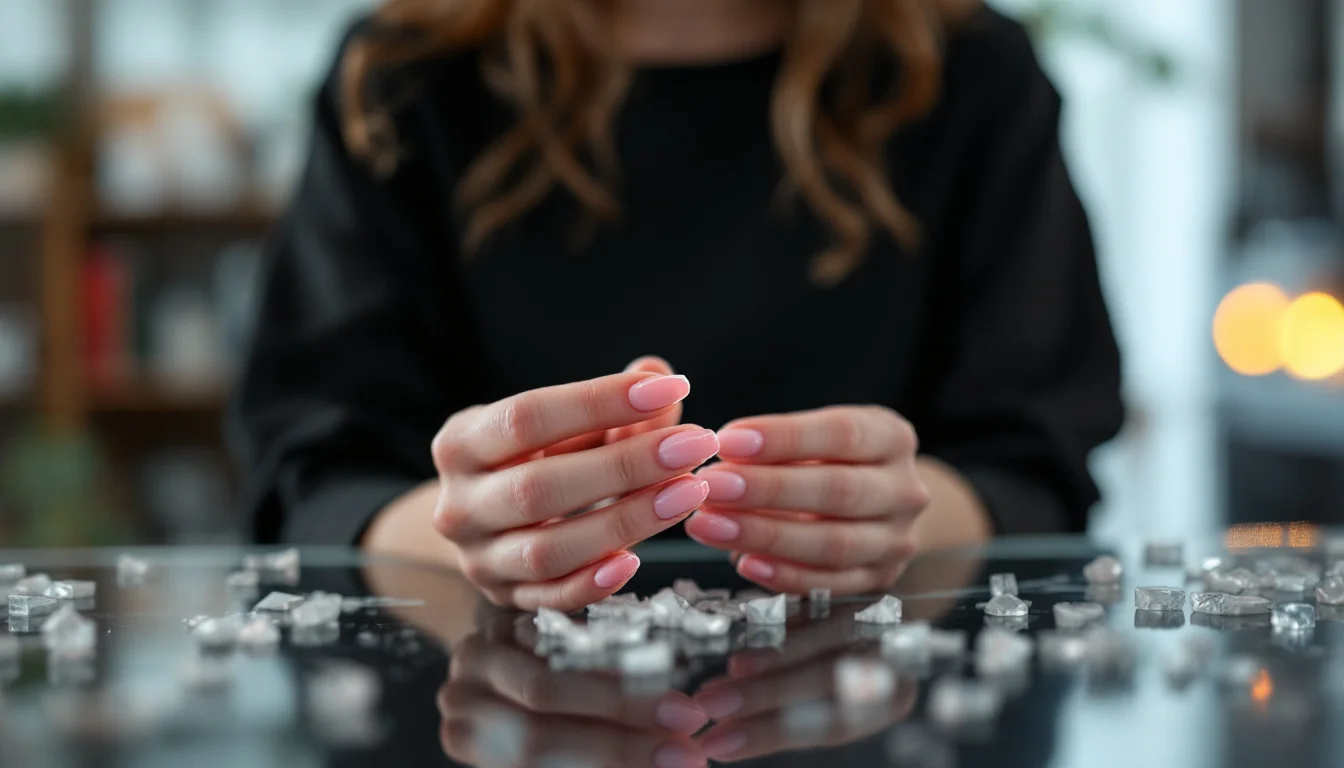
The sheer manicure trend has reached a decisive milestone. What initially caught the public's attention as the "glazed donut" look—popularized after Hailey Bieber wore it on the red carpet, according to PN Selfcare, a nail care brand (sister to the Belgian brand ProNails)—has now transformed into a mainstream salon request. This fall, the glossy, minimalist aesthetic is no longer just a top coat option; it goes hand in hand with an evolution in nail preparation and application protocols.
The lasting enthusiasm for these subtle visual effects has prompted the industry to respond with education. For instance, the nail polish brand Manucurist's blog now features an in-depth article specifically dedicated to the "glazed" nail trend. The explicit goal of this publication is to break down the technical aspects of the trend and, more importantly, explain how to recreate it with precision.
This approach shows that the topic is the subject of dedicated educational content from brands, marking the transition from a fleeting fad to a permanent protocol. In Belgium, this visual evolution is accompanied by increased professionalization, where perfect translucency requires tailored base coats and a level of technical mastery that leaves no room for improvisation.
Key Takeaways
- Four main finishes: The trend comes in Glazed Donut, Ice Cream, Soap, and Jello Nails.
- Strict prep work: The illusion of natural nails under a sheer polish requires a perfectly prepped and often reinforced nail plate.
- Chemical transition: The Belgian market is seeing a rise in HEMA- and TPO-free gels, though strict application protocols remain essential.
- Seasonal adaptation: The sheer effect is being applied over autumnal shades like chocolate brown or glossy black, which are among the season's best-selling colors.
From Hailey Bieber: The Spectrum of Sheer Finishes
The original chrome effect has heavily diversified to offer a range of finishes, from the most pearlescent to the most jelly-like. This variety allows professionals to offer bespoke services tailored to the skin tone and natural nail quality of each client.
Classifying the Sheer Effects
To navigate this complex landscape, here is the current typology of finishes:
| Trend | Required Base and Technique | Visual Effect and Finish |
|---|---|---|
| Glazed Donut Nails | Classic or milky base | A smooth, highly glossy finish with a pearlescent chrome-like reflection, resembling the sweet glaze of a donut. |
| Ice Cream Nails | Sheer nude base blended into a milky white tip | A sheer effect with a glossy, "glazed" finish. |
| Soap Nails | Sheer or milky base | The illusion of healthy, hydrated nails with a soft, glossy finish that catches the light, sometimes featuring shimmer or opalescent tones. |
| Jello Nails | Sheer gel polish in vibrant shades | Translucent nails in intense colors (cherry red, lime green, electric blue). |
The Evolution of Aesthetic Standards
Each of these variations illustrates a step toward the market's growing sophistication. "Ice Cream Nails," for instance, combine a sheer nude base blended into a milky white tip, creating a translucent effect of depth. This variation has emerged as a favorite, popularized by nail artist Harriet Westmoreland, whose clients include celebrities like Rosie Huntington-Whiteley and Zendaya.
Meanwhile, "Jello Nails" prove that translucency isn't limited to neutral tones. They are achieved using sheer gel polish in bright hues like cherry red, lime green, or electric blue, offering a pop-art alternative while maintaining the transparency demanded by the current trend.
The Illusion of Natural: Why "Sheer" Demands Structural Prep (BIAB)
The sheer finish aesthetic is built on a fundamental paradox: the more bare and natural the final result appears, the more complex the engineering on the nail plate must be. "Soap Nails" use a sheer or milky base with a soft, shiny finish that catches the light, sometimes enhanced with a touch of shimmer or opalescence. This design aims to give the perfect illusion of naturally hydrated, inherently healthy nails.
However, this illusion of perfect health tolerates absolutely no imperfections beneath the color coat. This is where mechanical and chemical preparation comes into play. The longevity of a semi-permanent color doesn't rely solely on the chosen shade. Meticulous cuticle prep, strict dust removal, the use of protocol-specific prep products, and the complete absence of contact between the product and the skin are crucial factors in a successful application.
The Central Role of Nail Reinforcement
To achieve that smooth, plump look beneath a clear or sheer polish, professionals are heavily turning to reinforcement techniques. "BIAB Nails" perfectly illustrate this technical necessity. These manicures are slightly thicker than a classic application, giving the nails a healthy, domed, and strong appearance.
The term stems from a specific product, "Builder In A Bottle," although the result can be recreated with other building methods. This structural reinforcement masks the ridges and irregularities of the natural nail, providing a smooth canvas—an essential foundation for the pearlescent or opalescent reflections of sheer finishes to shine without revealing any flaws in the nail plate.
The Belgian Market and the Chemical Transition: The HEMA- and TPO-Free Era
The adoption of these complex protocols comes with increased professional scrutiny of product compositions. The domestic Belgian market is showing strong momentum around safer gels and polishes, driven by local players who combine product distribution with education.
Local Roots and Professionalization
LuluNails is a Belgian brand specializing in professional nail care. It operates a physical store in Liège and an online sales platform, alongside a training center, also based in Liège. This infrastructure demonstrates that product distribution now goes hand in hand with essential technical education for nail technicians, particularly when it comes to applying complex structural bases.
The Chemistry of Modern Gels
Semi-permanent polishes are now being formulated without HEMA or TPO, two compounds traditionally used for curing.
These highly engineered formulas can be applied to natural nails as well as over extensions or reinforcements using traditional gel, Builder Gel, Rubber Base, or Acrygel. The versatility of these HEMA- and TPO-free products allows salons to maintain translucent effects while altering the chemical load of their services.
Necessary Transparency Regarding Risks
However, the technical messaging surrounding these new formulas remains nuanced. The fact that a product is labeled HEMA- or TPO-free does not mean there is absolutely zero risk of an allergic reaction. This factual clarification underscores the importance of the rigorous protocols mentioned earlier, particularly the strict avoidance of any contact between uncured gel and the skin during application.
Autumn: How to Adapt the Glazed Effect to Seasonal Shades
While the original trend focused on icy tones, current protocols make it possible to apply that translucency to much darker, more seasonal palettes, proving the versatility of top coat techniques.
The Trend's Chromatic Evolution
The glazed effect can be worn in a classic milky white, but it can also be customized with pastel bases for a softer look, or with darker shades for a distinctly bolder impact. This adaptability is at the core of what salons are offering for the current season.
For fall, several standout shades are dominating demand:
- Deep burgundies
- Chocolate browns (the chocolate brown "Marron Chocolat" is among the top sellers)
- Caramel nudes
- Taupe and plum
- Emerald green and midnight blue
- Magnetic Cat Eye effects
- Blacks (the glossy black "Glossy Black" is also among the best-selling colors)
Mastering Finishes: Glossy vs. Matte
Layering these shades with specific top coats can radically alter the visual architecture of the manicure. Using a glossy top coat intensifies the depth of burgundies, chocolate hues, midnight blues, and cat-eye effects.
Conversely, a matte top coat adds a velvety finish that is particularly well-suited for browns, taupes, khakis, and blacks. Finish hybridization is now a common technical evolution in salons: both matte and glossy finishes can be combined within a single manicure. It is increasingly popular to see a matte base accented with glossy details, merging the precision of nail art with the codes of minimalism.
Conclusion: Toward the "Skinification" of Nail Care
The rise of sheer finishes in manicure protocols marks an evolution for the industry. By demanding flawless nail architecture beneath layers of sheer or milky polish, the trend goes beyond simple color choices to mirror skincare rituals—where prep work and the health of the base take precedence over surface-level makeup.