Hybrid Makeup
The boundary between dermatological skincare, UV protection, and aesthetic makeup is highly porous. Historically, applying sunscreen was a utilitarian step, often seen as a chore due to thick textures or undesirable finishes. Today, the cosmetic trend focusing on the "your skin but better" aesthetic has completely shifted this dynamic. This approach has propelled one of the fastest-growing segments in the sun care market: tinted sunscreens. These products combine sun protection, skincare, and sheer coverage in one seamless step, according to formulation service provider Selfnamed.
This evolution goes beyond merely saving time in the morning. According to ingredient supplier Sensient Beauty, consumers no longer draw a line between skincare, color, and protection. Faced with an oversaturated market, the public now evaluates formulations through a highly perceptual lens. Touch, skin finish, and emotional benefits take precedence. A product is no longer judged solely on its ability to block ultraviolet rays, but also on how it feels as it glides onto the skin and the immediate glow it brings to the face.
Key Takeaways
- Blurring categories: Consumers now evaluate a sunscreen's efficacy through its feel and aesthetic finish, erasing the divide between skincare, color, and UV filters.
- Formulation innovation: The integration of iron oxides and hybrid filters (combining inorganic and organic filters) helps reduce the chalky effect, making broad-spectrum protection more wearable across a wide range of skin tones.
- Expansion beyond complexion: The development of color cosmetics, such as cream blushes and SPF eyeshadows, transforms reapplication from a medical chore into a genuine beauty touch-up.
Why Have Hybrid Filters Revolutionized Tinted Suncare?
The industry has long grappled with the trade-off inherent in physical sunscreens: effective protection invariably came with a visible white cast. To overcome this aesthetic hurdle, research pivoted toward new formulation architectures. Today, laboratories are ramping up the production of hybrid SPF formulas. These products strategically combine inorganic (often called mineral) filters with organic ones for a specific purpose: achieving an optimal balance between cosmetic elegance and rigorous broad-spectrum protection.
This technical development specifically targets users seeking ultra-lightweight textures but who refuse to completely abandon inorganic ingredients in their routines. Hybridization allows for a reduced titanium dioxide load while maintaining the SPF rating. Consequently, it creates an ideal structural base for complexion products.
| Formulation Profile | Main Components | Cosmetic Benefits | Technical Limitations |
|---|---|---|---|
| Traditional inorganic sunscreen | Pure titanium dioxide and zinc oxide | Direct physical shield | High risk of white cast |
| Pure organic sunscreen | Synthetic organic compounds | Total transparency | No complexion-correcting effect |
| Hybrid SPF makeup | Mixed filters + iron oxides | Even coverage, natural finish | Complex pigment stabilization |
The integration of color has been the second major technological lever. Recent innovations surrounding iron oxides and the development of tinted inorganic options have transformed how these creams look on the skin. By coating or blending these oxides with physical filters, the mask-like effect has been minimized. These advancements have made broad-spectrum sun protection far more wearable across a diverse range of skin tones, democratizing access to subtle, everyday photoprotection.
Beyond Foundation: Expanding Into Color Cosmetics
The industry's goal is to design formulas that melt instantly into the user's routine, without leaving any residue or disrupting existing makeup. This demand has sparked the emergence of lightweight mists, primers, mattifying creams, and, more innovatively, color cosmetics with built-in SPF. Sun protection is thus stepping out of the strict foundation category and making its way into accent products.
Skincare-Infused Protective Blush
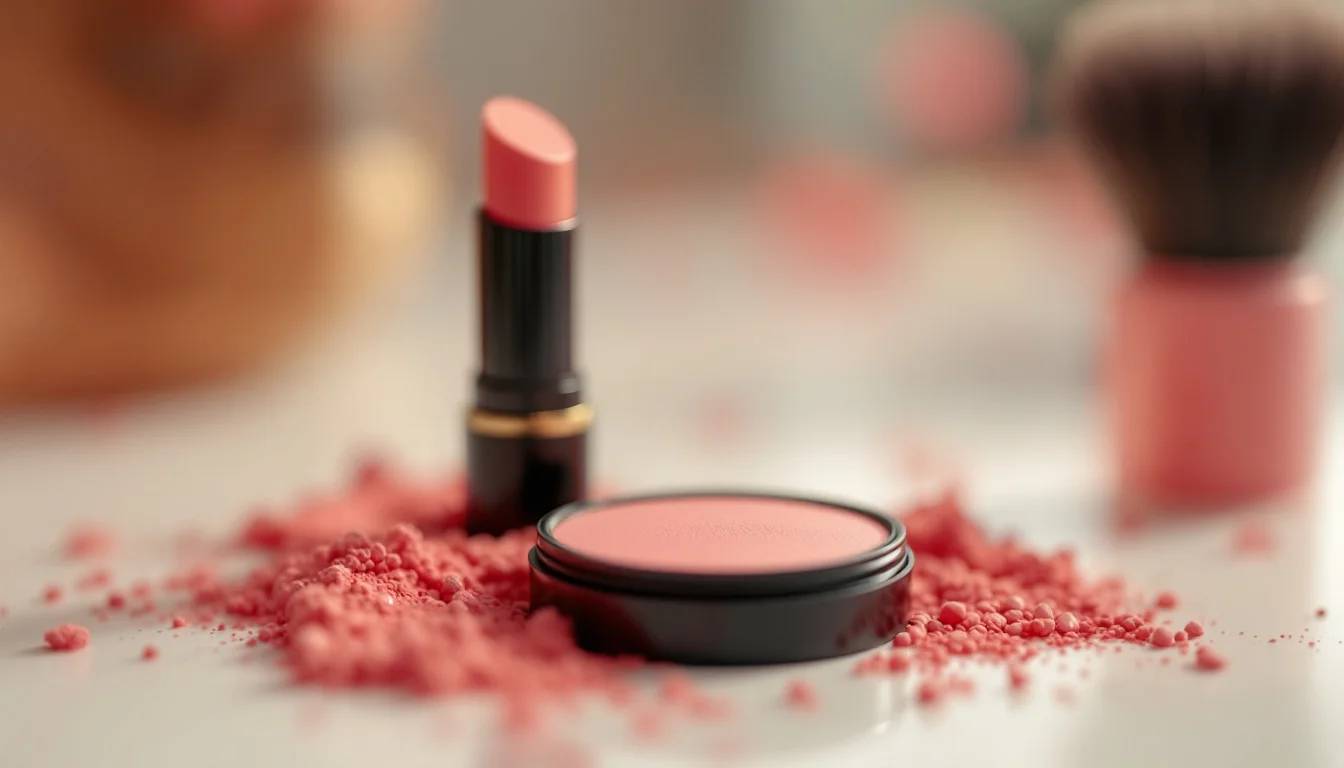
The cheek segment perfectly illustrates this convergence. The concept of a cream blush with SPF speaks directly to modern expectations for makeup that prioritizes skin health, where decorative pigments also act as a shield.
The formulation mechanics behind these cream blushes are highly sophisticated. Pigments can be treated with avocado butter—a technical process that creates a dry-touch finish while delivering emollient care to the epidermis. In these non-powder formulas, the addition of titanium dioxide and zinc oxide ensures the necessary inorganic UV protection. Meanwhile, integrating sericite into the matrix helps the product glide smoothly over the cheek and gives the final result a luminous glow.
The Eye Contour: A Reimagined Zone
Hybridization is also tackling areas that have historically been left vulnerable. Bringing SPF to the delicate eye area answers a real need. Eyelids and the eye contour are actually among the most neglected areas when it comes to sun protection, as traditional creams tend to migrate or irritate this thin skin.
To fill this gap, the industry is rolling out cream eyeshadows fortified with sun protection. Technically speaking, using pigments paired with surface-treated inorganic filters ensures smooth adherence, true color payoff, and UV protection without any chalkiness. Additionally, the formula can seamlessly transition from a creamy state to a matte finish, preventing it from creasing on the eyelids as the day wears on.
When Sensory Appeal Drives Compliance
The shift from a utilitarian UV filter to a highly technical color cosmetic fundamentally changes the psychological relationship with the product. Texture is now the key differentiator among brands, and sensoriality has emerged as the new benchmark for efficacy. Consumers no longer judge performance solely on the clinical tests printed on the packaging, but rather on perceived comfort and the immediate improvement of skin texture.
This aesthetic redefinition goes hand-in-hand with a rejection of old makeup norms. The market is moving away from flat, drying matte finishes that leave features looking stiff. Instead, there is a growing craze for soft finishes and breathable textures that evoke a natural luminosity, leaving the skin looking perfectly smooth, plump, and hydrated.
The impact of this sensory shift on user behavior is profound. Application habits have evolved. Consumers no longer just apply their SPF in front of the mirror in the morning. They are now making spontaneous reapplications between errands, at the gym, directly over their existing makeup, while traveling, or throughout the workday.
In this context of on-the-go mobility, the convenience of reapplication becomes a major commercial differentiator. Multi-functional products with built-in SPF encourage uninterrupted daily use. By fitting so naturally into makeup touch-up routines, these hybrid textures increase the likelihood of regular reapplication. And it is precisely this frequency that determines the true, long-term effectiveness of UV protection. The aesthetic step thus replaces the preventative chore, promoting much better photoprotection compliance.
However, this evolution toward sensoriality faces a major limitation highlighted by dermatologists: the applied dose. Complexion products are generally applied in cosmetic amounts, which is far less than the 2 mg/cm² required to achieve the labeled sun protection factor. As a result, an SPF foundation or blush complements a routine, but it does not replace the initial application of a dedicated sunscreen.
Frequently Asked Questions (FAQ) About Tinted SPFs
Can I skip a dedicated sunscreen if I wear an SPF 50 foundation?
No. Although the pleasant textures of new formulas encourage reapplication, makeup products with SPF are applied too sparingly to offer the full protection indicated on the label. Users should consider them as a supplement to a traditional dermatologist-recommended sunscreen, rather than a total substitute.
How much product should be applied to achieve the labeled SPF?
You need to apply approximately 2 mg/cm² of product to the skin to achieve the protection level stated on the packaging. In practice, the cosmetic dose applied during a makeup routine is significantly lower, which drastically reduces the actual UV protection delivered to the face.
How can I reapply without product buildup?
The industry now offers hybrid alternatives designed specifically for touch-ups. Lightweight mists, mattifying powders, and even SPF color cosmetics (like blushes or eyeshadows) allow you to reapply UV filters directly over existing makeup throughout the day, without ruining the initial aesthetic finish.
Conclusion
As blushes and eyeshadows demonstrate their ability to merge high pigment payoff with an anti-UV shield, the role of purely decorative products is shifting. Sensoriality and protective skincare now coexist in a highly satisfying aesthetic finish.